How to Build a Solopreneur Business While Working a Full-Time Job (The System That Actually Works)
How I built multiple AI-led businesses without quitting my job - and why you should treat your job as your first client. If you’ve been following our…

How I built multiple AI-led businesses without quitting my job - and why you should treat your job as your first client.
If you’ve been following our Solopreneur → System Founder → AI Business journey, here’s what we’ve covered so far:
1️⃣ Who owns the code and access
2️⃣ How to manage tech teams as a non-technical founder
3️⃣ From Solopreneur → Micro-Team: How to Scale While Staying in Control
4️⃣ The Revenue Share Trap — Why Founders Lose Control
5️⃣ Push vs Pull — The Founder’s Revenue System
6️⃣ How to Build an AI-Run Business Without Being an AI Engineer
7️⃣ The Invisible Founder — How to Run Your AI Company Like a CEO (Without Losing Control)
8️⃣ How to Set Up Your AI Company Before You Scale It
And today’s post is for anyone who’s been asking me this question over and over again:
“Can I really start a business without quitting my full-time job?”
My answer:
Yes. You absolutely can.
In fact, that’s exactly how I built my businesses.

My Turning Point
When I had one full-time job, I worked 12–15 hours a day and was always busy.
Now, I manage one full-time job and four businesses on the side - and I’m mostly free.
Not because I work less, but because I finally learned how to work right.
I’m not sharing this to boast, but because this single mindset shift changed my entire life:
“Do your job as if it’s your business.”
At first, it didn’t sound revolutionary.
But once I applied it, everything shifted - my focus, my ownership, my peace of mind.
💡 The Shift That Changed Everything
Before, I treated my job like something that would last forever.
I would do my part, wait for instructions, and move at the company’s pace.
But when I began treating it like my own project, my entire approach changed.
I stopped thinking like an employee waiting for direction — and started thinking like an owner delivering results.
Instead of asking, “What should I do next?”
I started asking, “What’s the best way to finish this off efficiently?”
That shift - from execution to ownership - changed everything.
The Hidden Trap of Overcommitment
Here’s something you might have noticed too:
When you have extra time or flexibility in your job, you often end up giving it more attention than it actually needs.
You go beyond what’s required, over-polish reports, sit on meetings you don’t need to be in - all under the illusion of “being productive.”
But that extra time and energy aren’t coming from discipline.
They’re coming from underplayed potential.
That energy was meant to build something yours.
You’re not lazy.
You’re just channeling your best energy into something that doesn’t belong to you yet.
🔄 Reframe: Your Job is Your First Client
This is the mindset that made everything click for me.
Stop thinking of your job as your employer.
Start thinking of it as your first paying client.
When you make this shift, three things happen:
✅ You start focusing on deliverables, not just hours.
✅ You start building systems around your work.
✅ You stop emotionally attaching to every office problem - because now, you’re running a business.
You deliver quality because your reputation matters.
But you also save time, because every extra hour can be invested in your own company.
Why I Still Haven’t Quit My Job
People often ask me -
“If your business is doing well, why haven’t you left your job?”
The truth is - my job is my easiest, most consistent client.
I don’t have to market, pitch, or chase invoices.
My systems are set, my team is trained, and my time commitment is predictable.
If I had to find a new client that pays me the same, I’d spend thousands on marketing, sales, and delivery.
So, why would I leave that kind of stable, low-effort income stream?
It’s not “either job or business.”
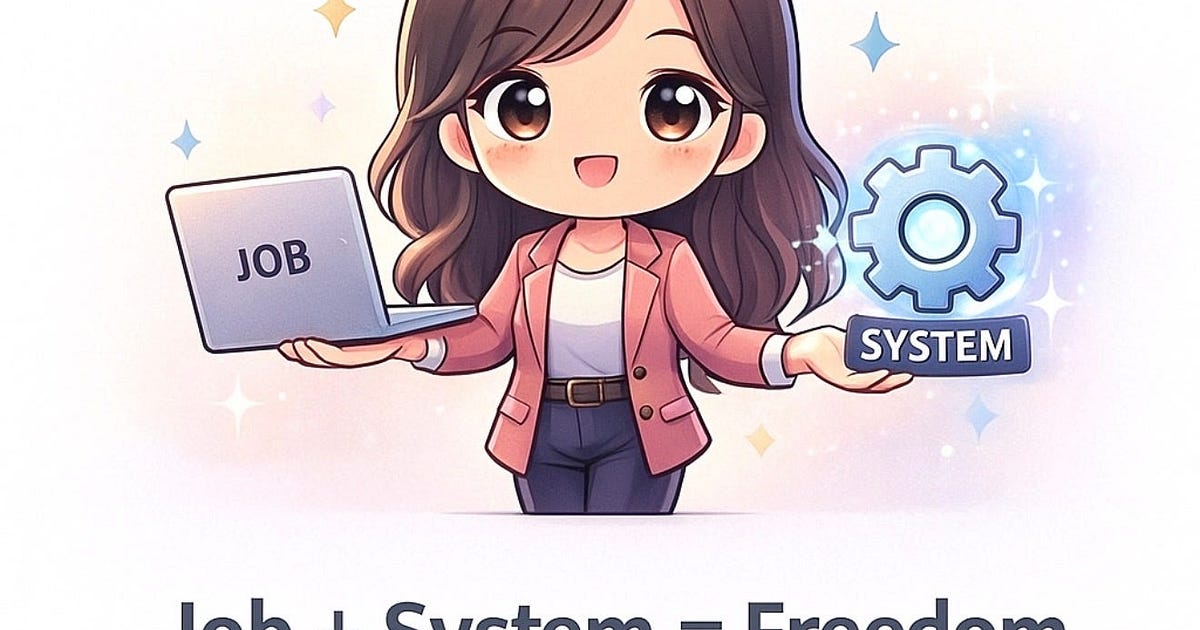
It’s job + business = financial leverage.
How You Can Start Right Now
Here’s how I suggest you begin - practically:
1️⃣ Treat your job like a project.
Think in terms of timelines, outcomes, and client satisfaction.
2️⃣ Build your business during peak energy windows.
For most people, that’s early morning or late evening.
3️⃣ Use AI tools to multiply yourself.
Tools like Lovable, Notion AI, or ChatGPT with n8n can automate almost everything except thinking.
4️⃣ Start documenting your business processes from Day 1.
Even if it’s just you - write down how things get done. That’s how systems begin.
5️⃣ Keep money flowing through your company’s account.
Always invoice through your business - even small clients - so the financial structure is ready when you grow.
Real Freedom is in Control, Not Escape
The goal isn’t to “escape your job.”
The goal is to gain control over your time, your earnings, and your creative direction.
When you master one job and one business at once,
you’ll realize you can easily handle multiple systems running in parallel with calm, not chaos.
Because it’s not about working harder.
It’s about thinking like an owner.
Everywhere you are.
Next in the AI Solopreneur Series
In the next post, we’ll cover:
How to hire your first employee or freelancer, set up payroll, and manage finances - without losing control.
And if you’re new here, subscribe to instrovate.substack.com 🍀
We talk every week about how to build AI-powered businesses step-by-step while still working full-time.
Originally published on Substack