The Invisible Founder: How to Run Your AI Company Like a CEO (Without Losing Control)
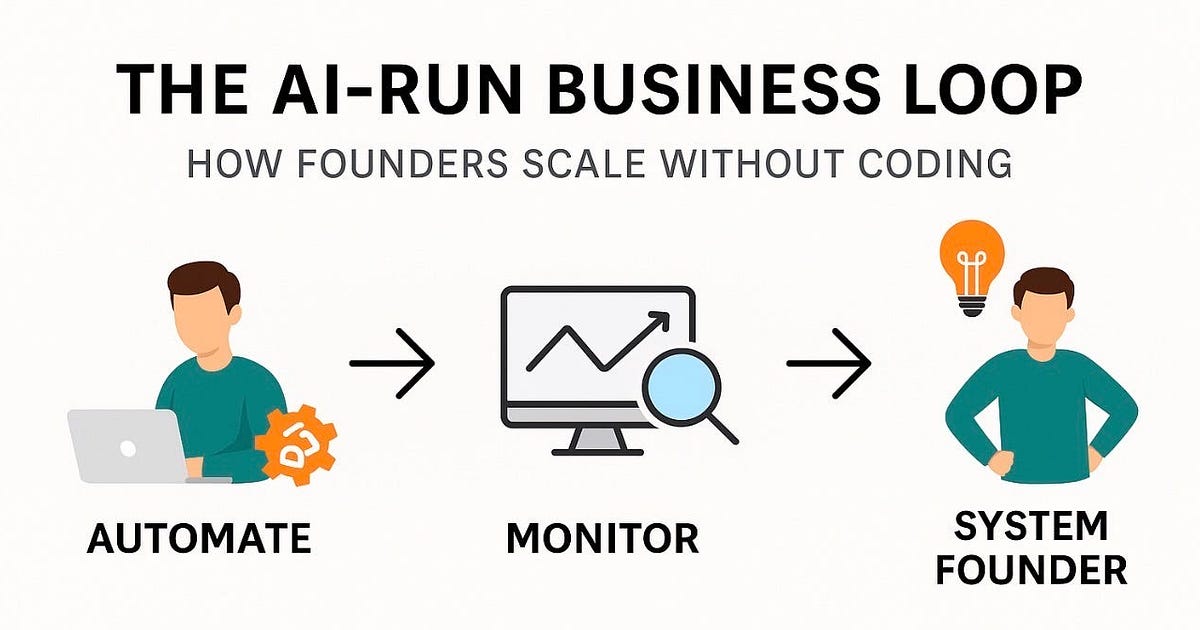
If you’ve been following our Solopreneur → System Founder journey, we’ve already covered: 1️⃣ Who owns the code and access 2️⃣ How to manage tech teams as a…
If you’ve been following our Solopreneur → System Founder journey, we’ve already covered:
1️⃣ Who owns the code and access
2️⃣ How to manage tech teams as a non-technical founder
3️⃣ How to scale from solopreneur → micro-team → system
4️⃣ The Revenue Share Trap — Why Founders Lose Control
5️⃣ Push vs Pull — The Founder’s Revenue System
6️⃣ How to Build an AI-Run Business Without Being an AI Engineer
7️⃣ How to Set Up Your AI Company Before You Scale It
And now it’s time for the next leap:
Once your company starts running smoothly — how do you stay in control without being everywhere?
The Founder’s Dilemma: Visibility vs. Control
When you begin to scale, it’s not the clients or projects that overwhelm you - it’s the noise.
Suddenly there are Slack messages, WhatsApp chats, emails, and random updates.
The founder slowly gets disconnected from the system they built.
The team starts running things, but the vision starts fading.
That’s when founders begin to lose visibility - and soon, control.
Why You Need a Company-Controlled Communication Hub
Your business can’t depend on scattered communication.
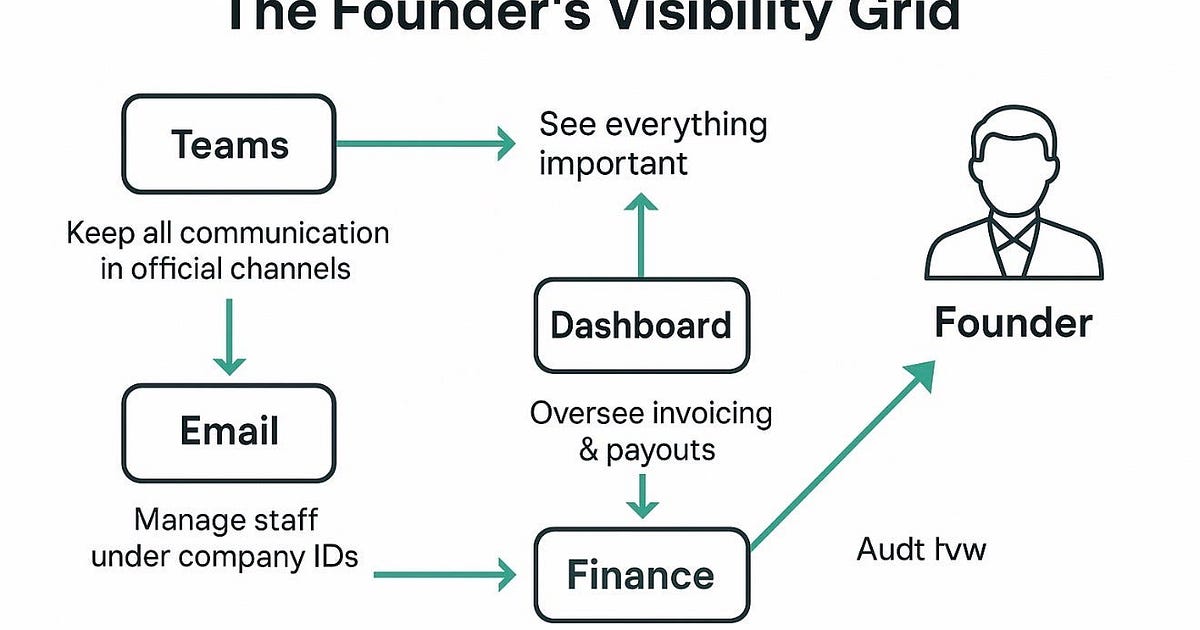
That’s where Microsoft Teams (or Google Chat for Google Workspace users) becomes your central nervous system.
This is not just about productivity. It’s about visibility.
Every message, file, or decision should flow through a controlled environment where you - the founder - have oversight without being in every conversation.
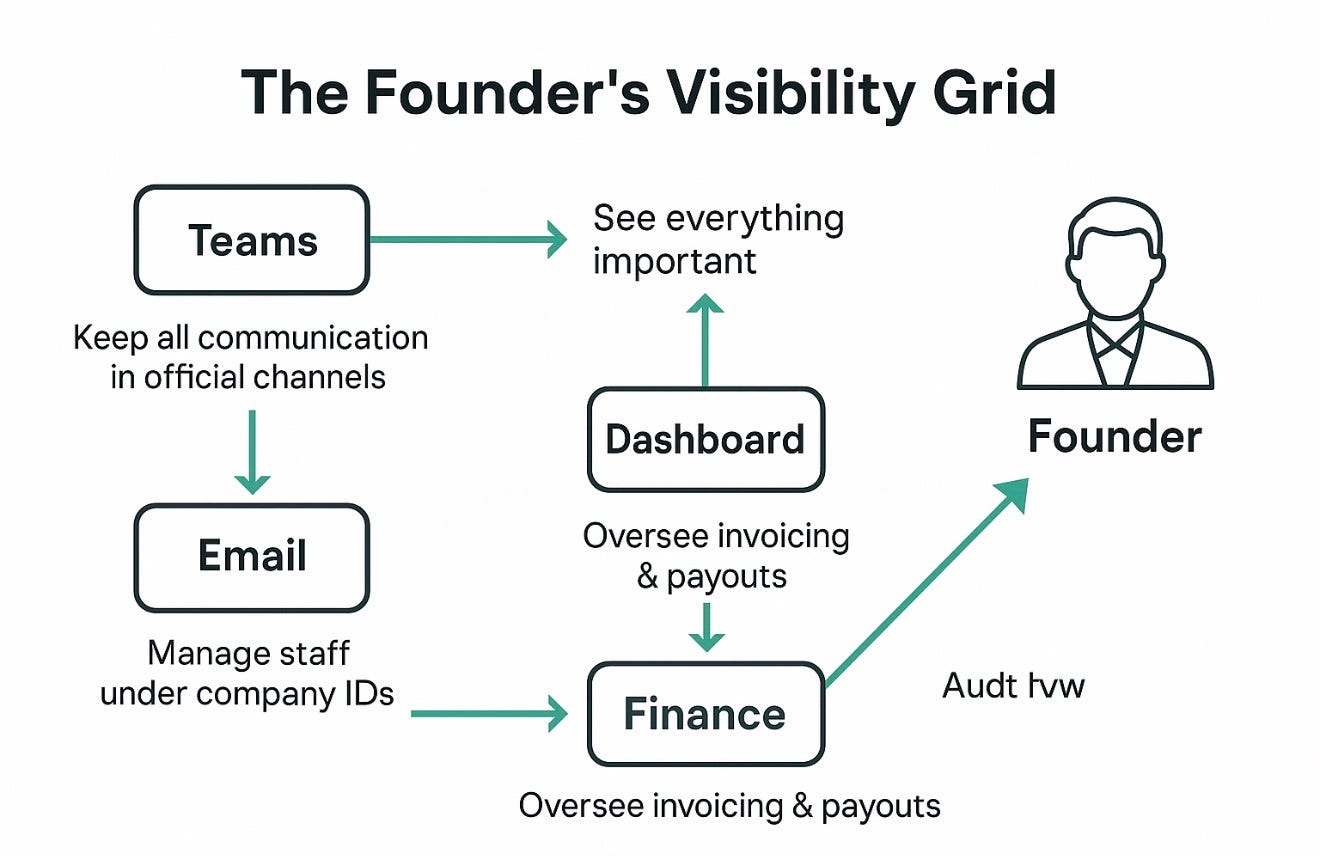
Step-by-Step: The Invisible Founder Setup
1️⃣ Set Up Microsoft Teams (or Google Workspace Chat)
Create separate Teams for:
Client Projects – all client-specific discussions
Internal Operations – for your own staff
Finance & Admin – where only authorized members see invoicing or payout details
💡 Pro Tip: Disable personal Gmail access; add all freelancers or partners using company email IDs.
This ensures if someone leaves, you can revoke their access instantly — from one dashboard.
2️⃣ Design Channels for Control, Not Chaos
Within each Team, make Channels that act as “rooms”:
#client-abc for project discussions
#finance for payments
#delivery-updates for progress
Each channel = your visibility window.
Even if you’re not chatting daily, you can scroll through and know exactly what’s happening.
3️⃣ Add Your Financial Systems
Once Teams is in place, connect your finance apps:
Zoho Books + Zoho Payroll (India & UAE-friendly)
QuickBooks + Gusto (for US-based founders)
This lets you approve invoices and salaries right from your company login — without chasing anyone.
4️⃣ Keep Everything Under Company IDs
Every member of your team — whether intern, contractor, or manager — should use your company domain.
E.g. support@instrovate.com, support@instrovate.com, etc.
Because whoever controls the email IDs controls the business.
This is your digital ownership anchor.
5️⃣ Move From Founder Chaos → Founder Clarity
Once all systems (Teams, Email, Finance) are integrated, something magical happens —
Your business starts running on its own system, not on your constant supervision.
You don’t need to attend every meeting or read every message — yet you can see everything important.
You’ve just become what I call the Invisible Founder — the one who runs the show, without being inside the circus.
Bonus: AI Makes It Even Better
With AI copilots and automation tools (like Microsoft 365 Copilot or n8n), you can:
Get automated summaries of all key Teams discussions
Receive alerts when projects are delayed
Auto-generate invoices and summaries weekly
You’re not just managing people now —
you’re managing systems that think, remind, and act on your behalf.
🏁 Final Takeaway
Two of the most important things that separate a busy founder from a scalable founder are:
1️⃣ All communication should stay in official channels.
2️⃣ All money should flow into your company bank account — never directly to individuals.
Small decisions. Massive impact.
They define whether you run your business, or your business runs you.
👉 Read the full series from the beginning here:
Originally published on Substack