Why Forward Deployed Engineers ( FDE’s ) Are Becoming Essential for Enterprise AI : From Proof of Concept to Production
How Forward Deployed Engineers help organisations turn AI experiments into production-ready solutions, modernise data platforms, and bridge the gap between technology and measurable business outcomes.
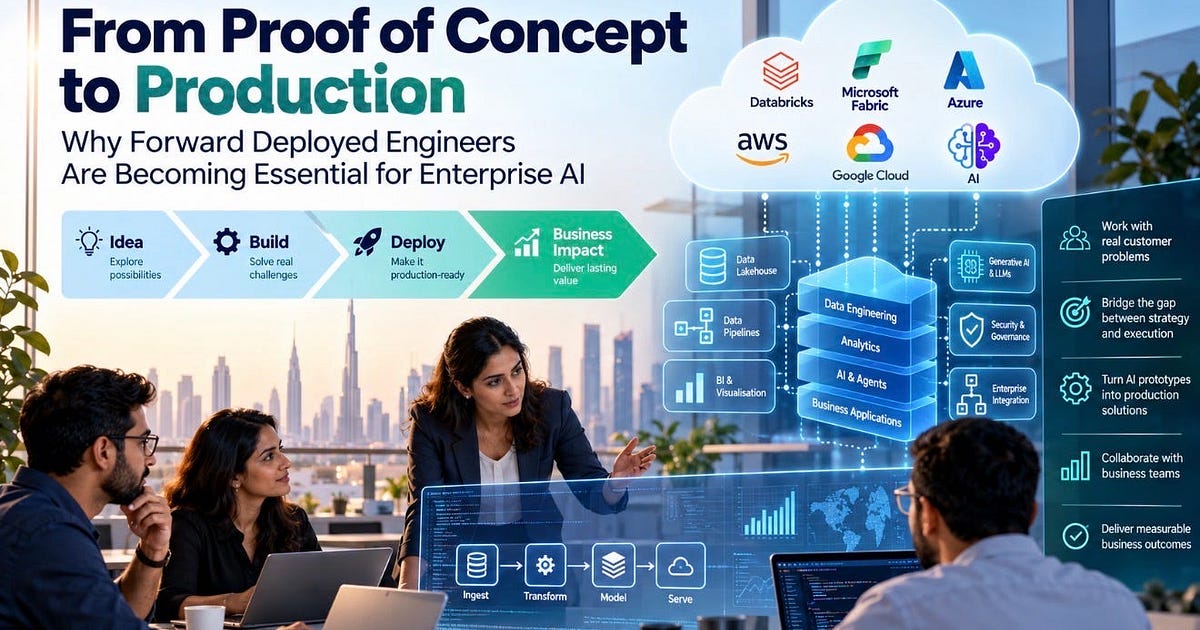
AI models are improving. Data platforms are becoming more powerful. Yet many organisations still struggle to turn promising technology into measurable business outcomes. The missing link may not be another tool or another strategy deck. It may be the engineering expertise needed to make everything work in the real world.
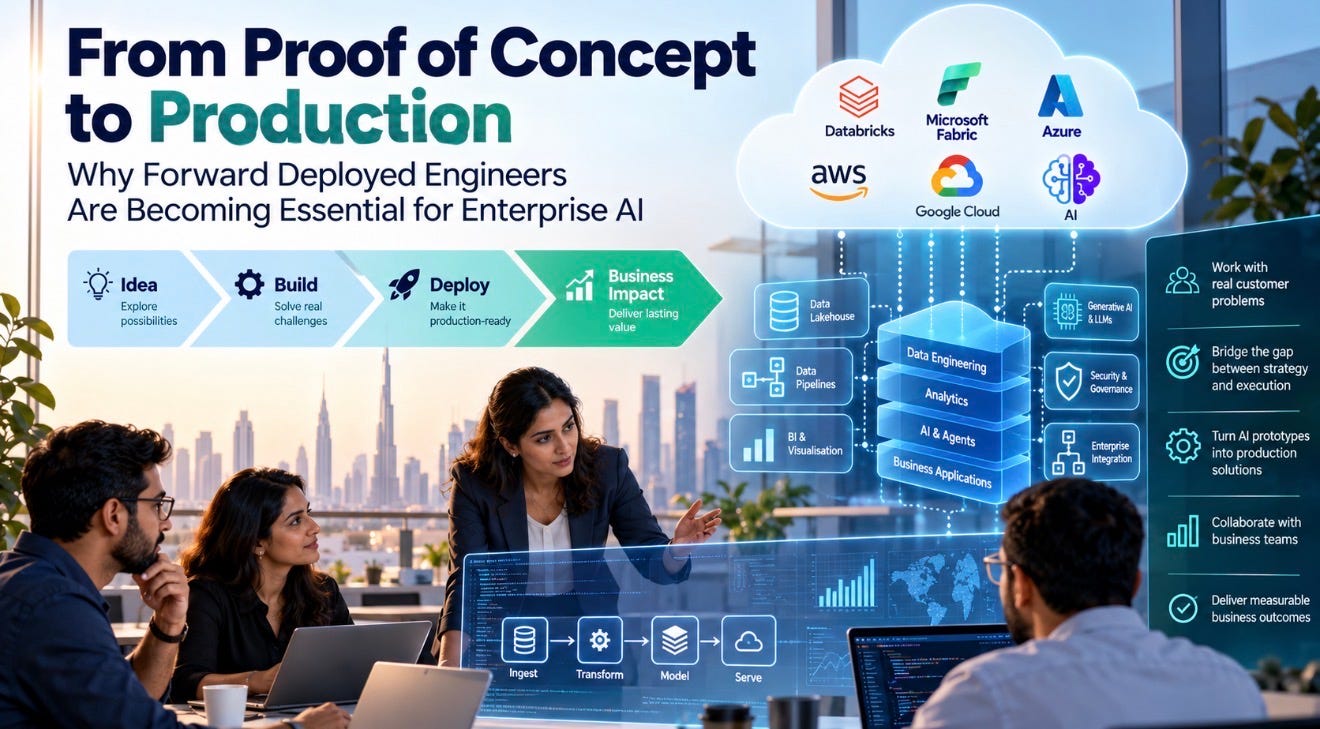
The problem isn’t always the technology
Across industries, organisations are investing in data platforms, cloud modernisation, AI assistants, intelligent agents and advanced analytics. Teams are experimenting with Microsoft Fabric, Databricks, Azure AI and generative AI solutions.
A proof of concept looks promising. A dashboard demonstrates business value. An AI assistant answers questions correctly in a controlled environment. A data pipeline works with a sample dataset.
Then the real implementation begins. The production data is more complicated than expected. Security requirements introduce new constraints. Existing systems need to integrate with the new solution. Business users have different expectations from the technical team. Performance, governance, cost and reliability suddenly become critical.
The challenge is no longer simply demonstrating that a technology works. It is making that technology work reliably within the organisation’s actual environment.
This is where Forward Deployed Engineering becomes particularly valuable.
What is Forward Deployed Engineering?
Forward Deployed Engineering, or FDE, is a delivery model in which engineers work closely with customers and business teams to understand real problems, build practical solutions and help implement them in the environments where they will be used.
Rather than working in isolation and handing over a finished specification, Forward Deployed Engineers collaborate directly with the people experiencing the problem.
They understand the business context, investigate technical constraints, develop solutions, test assumptions and iterate based on real feedback.
An FDE may work alongside a client’s data engineering team to improve a Databricks pipeline, help implement a Microsoft Fabric architecture, integrate an AI agent into an existing business process or turn a promising AI prototype into a production-ready solution.
The defining characteristic is not simply the technology being used. It is the close connection between engineering, the customer and the business outcome.
Why traditional delivery approaches can struggle
Traditional project delivery has an important role. Architecture documents, requirements, project plans and clearly defined handovers remain valuable.
However, complex data and AI projects often involve uncertainty that cannot be resolved entirely during the planning phase.
Consider a company building an enterprise knowledge assistant. The initial requirement may be straightforward: allow employees to ask questions about internal documents.
During implementation, the team discovers inconsistent source documents, complex access permissions, outdated information and questions that require data from multiple systems. The solution now needs retrieval improvements, identity-aware access, evaluation, monitoring and ongoing refinement.
A team that only delivers against the original specification may struggle to address these evolving requirements efficiently. An FDE helps close this gap by working through the real-world challenges with the customer, adapting the implementation as new information emerges and keeping the focus on the intended outcome.
The goal is not to replace good project management or architecture. It is to complement them with hands-on engineering that responds to reality.
Where Forward Deployed Engineers create value
1. Data engineering and modern data platforms
Moving data to the cloud is only one part of modernisation. Organisations must also build reliable ingestion pipelines, establish data quality, implement governance, optimise workloads and make data available to downstream applications.
An FDE can work directly with existing teams to implement and improve these capabilities.
For example, a business adopting Databricks may need help designing a lakehouse architecture, developing PySpark transformations, implementing Delta Lake patterns, optimising jobs and integrating pipelines with enterprise reporting.
Similarly, a Microsoft Fabric implementation may involve Lakehouses, Data Factory pipelines, semantic models, governance and Power BI.
The value comes from solving the actual implementation challenges rather than stopping at recommendations.
2. Turning AI experiments into usable solutions
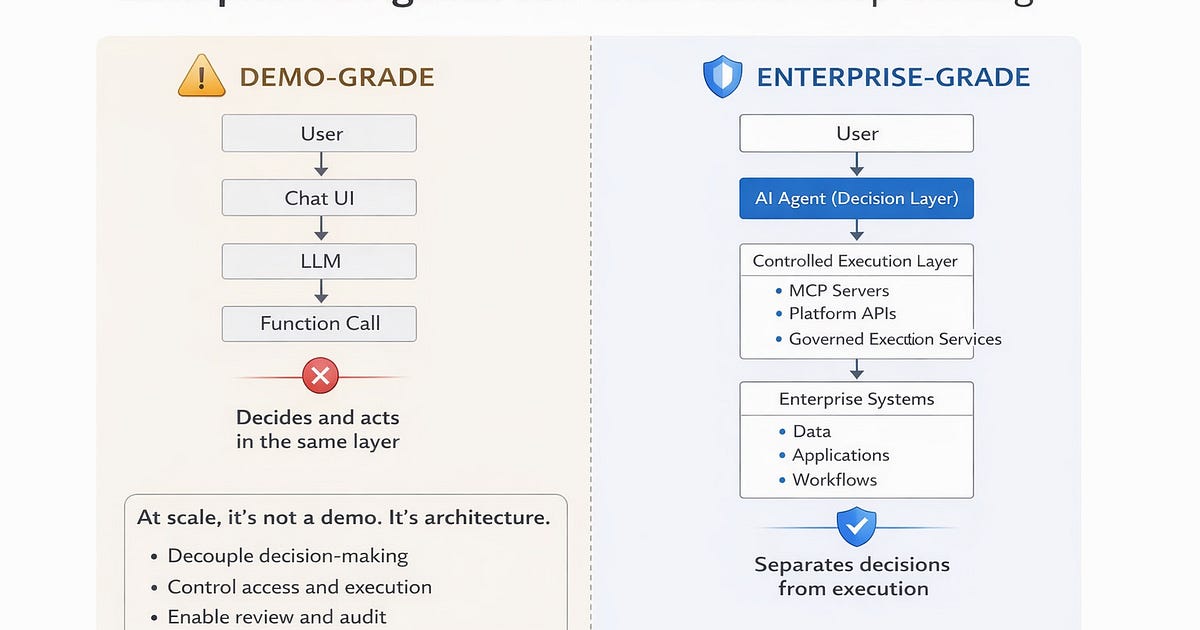
Many organisations can build an AI demonstration. Fewer have established a repeatable process for deploying, evaluating and maintaining AI solutions in production.
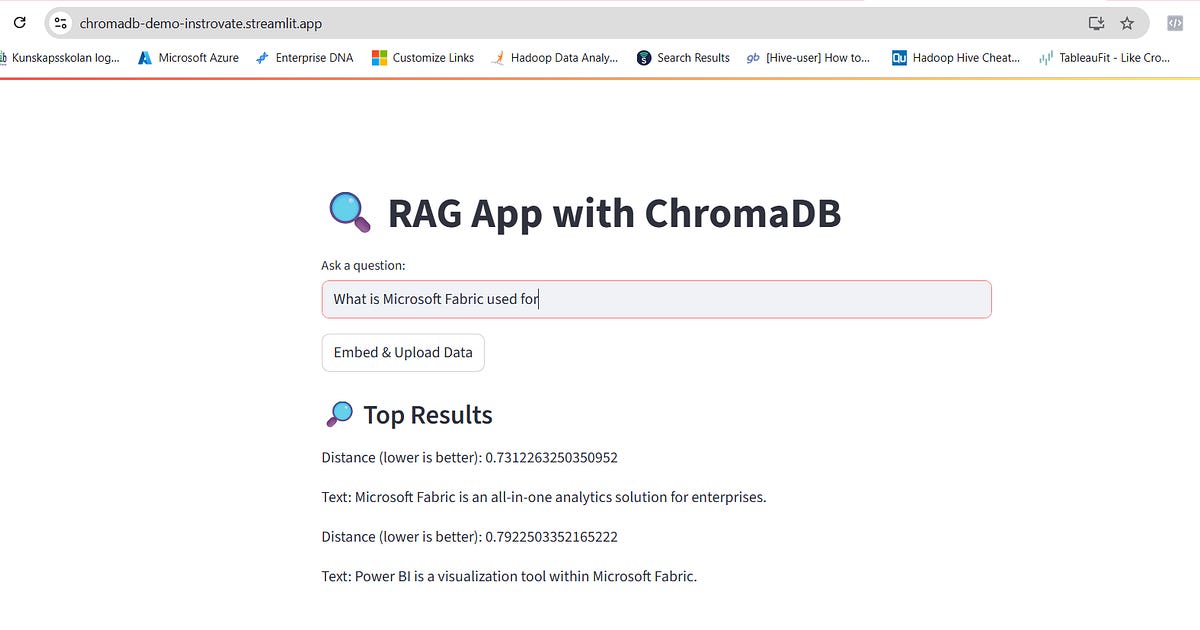
An FDE can help connect models, enterprise data, APIs, identity systems and business workflows. The work may include retrieval-augmented generation (RAG), evaluation frameworks, agent orchestration, monitoring, security controls and integration with existing applications.
Success is not measured by whether the demonstration impresses stakeholders. It is measured by whether the solution is useful, reliable, secure and maintainable in its intended environment.
3. Connecting technology with business processes
Sometimes the biggest challenge is not the data platform or the AI model. It is understanding how people actually work.
An FDE collaborates with users to identify bottlenecks, simplify workflows and build solutions that fit existing business processes.
This could mean automating a repetitive approval process, embedding AI into a customer service workflow, building an operational dashboard or creating an application that brings fragmented information together.
By staying close to users, the engineering team can validate whether the solution solves the right problem before investing in unnecessary complexity.
Why consulting companies should pay attention
Forward Deployed Engineering is also relevant to consulting and technology service providers.
Consulting firms frequently face changing project demands. One engagement may require a Databricks specialist, another a Microsoft Fabric architect, and another an engineer who can integrate AI capabilities into an existing application.
Recruiting every specialist as a permanent employee may not be practical. At the same time, declining work because the right skills are unavailable can affect delivery timelines and growth.
An extended delivery model offers another option. A consulting company can bring in experienced engineers for a defined engagement, a particular workstream or a period of additional demand. These engineers can collaborate with the existing project team, work within agreed delivery processes and contribute to defined outcomes.
This can support:
Specialist skills for projects requiring Databricks, Microsoft Fabric, Azure data engineering or AI implementation.
Additional engineering capacity when existing teams face delivery pressure.
Project-based engagements without immediately expanding permanent headcount.
White-label or subcontracted delivery, where the commercial arrangement and client relationship are agreed in advance.
Flexible access to expertise across multiple technologies and project stages.
The important point is that an extended delivery partner should not simply supply a CV. It should bring people who can contribute meaningfully to the work, communicate effectively with the team and take ownership of agreed deliverables.
FDE is not simply staff augmentation
Staff augmentation and Forward Deployed Engineering can overlap, but they are not identical.
Staff augmentation typically focuses on adding people to an existing team. FDE places greater emphasis on understanding the customer’s problem, working close to stakeholders and helping drive implementation towards a defined outcome.
The distinction depends on how the engagement is structured. An engineer supplied through a consulting partner can work in an FDE-style model when the role includes close customer collaboration, practical problem-solving and responsibility for agreed outcomes.
The title alone does not create the value. The working model does.
The skills that make an effective FDE
A strong Forward Deployed Engineer needs more than technical knowledge.
Technical depth: The ability to design, build, troubleshoot and maintain solutions across relevant platforms and tools.
Business understanding: The ability to understand why a problem matters and how the solution will be used.
Communication: The ability to work with engineers, architects, business stakeholders and end users without creating unnecessary complexity.
Adaptability: The willingness to investigate unfamiliar systems, challenge assumptions and adjust the approach as evidence emerges.
Delivery ownership: The discipline to test, document, secure and operationalise solutions rather than stopping when the code or prototype works.
These capabilities are particularly important in data and AI, where success depends on the interaction of technology, data quality, security, business processes and user adoption.
How to get started with FDE
Organisations do not need to transform their entire delivery model overnight.
A practical starting point is to identify one problem with a clear business objective and a manageable scope.
For example, a team could engage an FDE to improve the reliability of a data pipeline, productionise an AI proof of concept or integrate a new data platform with an existing reporting environment.
Define the expected outcome, access requirements, responsibilities, security boundaries and success measures. Work closely with the relevant stakeholders, review progress regularly and evaluate the results before expanding the engagement.
This approach allows organisations to test the model against a real problem instead of treating FDE as another abstract technology trend.
The future belongs to teams that can execute
The next stage of enterprise AI and data transformation will not be determined solely by who adopts the newest platform first.
It will also depend on who can integrate technology into real environments, solve the problems that emerge during implementation and deliver solutions that people can actually use.
Forward Deployed Engineering offers a way to bring technical expertise closer to those challenges.
For businesses, it can help bridge the gap between experimentation and implementation. For consulting firms, it can provide access to specialist skills and flexible delivery capacity. For engineers, it creates an opportunity to combine technical depth with direct business impact.
At Instrovate Technologies, this is the thinking behind our Train • Consult • Deploy approach. We work across Microsoft technologies, Databricks, data engineering and AI, supporting organisations and consulting partners with training, consulting expertise and engineering delivery capacity.
The objective is straightforward: help teams move from ideas to practical, working solutions.
Is your organisation struggling to move a data or AI initiative from proof of concept to production? Or are you a consulting firm looking for specialist delivery capacity?
Let’s start a conversation.
Instrovate Technologies
Train • Consult • Deploy
instrovate.com | instrovate.com
Originally published on Substack