MCP in the Real World: Why Internet Apps and Databricks-Native Apps Need Different Designs
Model Context Protocol (MCP) is often explained as “a way for agents to call tools.” That description is technically correct — but architecturally incomplete.
In practice, MCP solves different problems depending on where your UI lives.
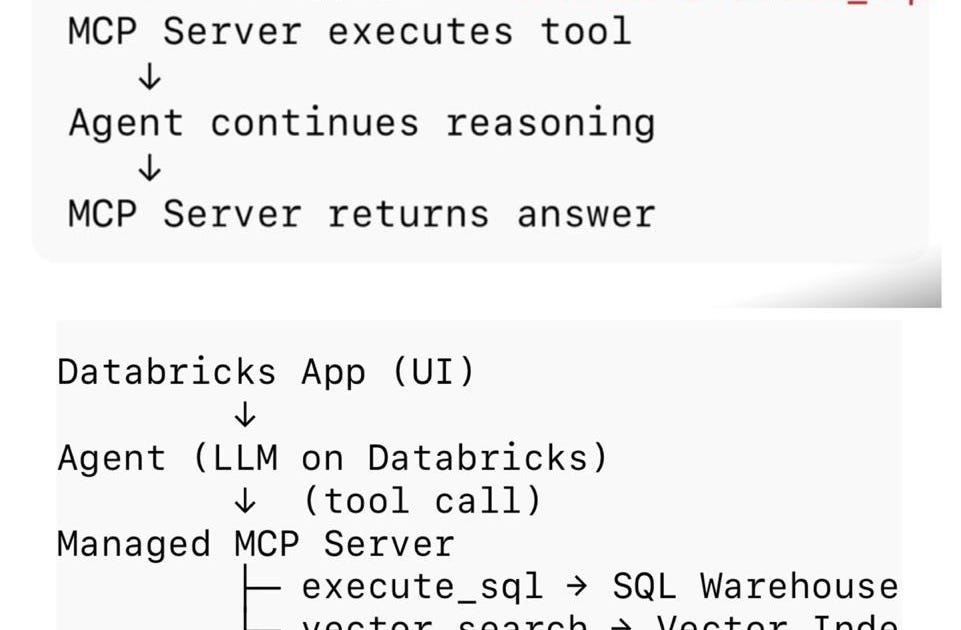
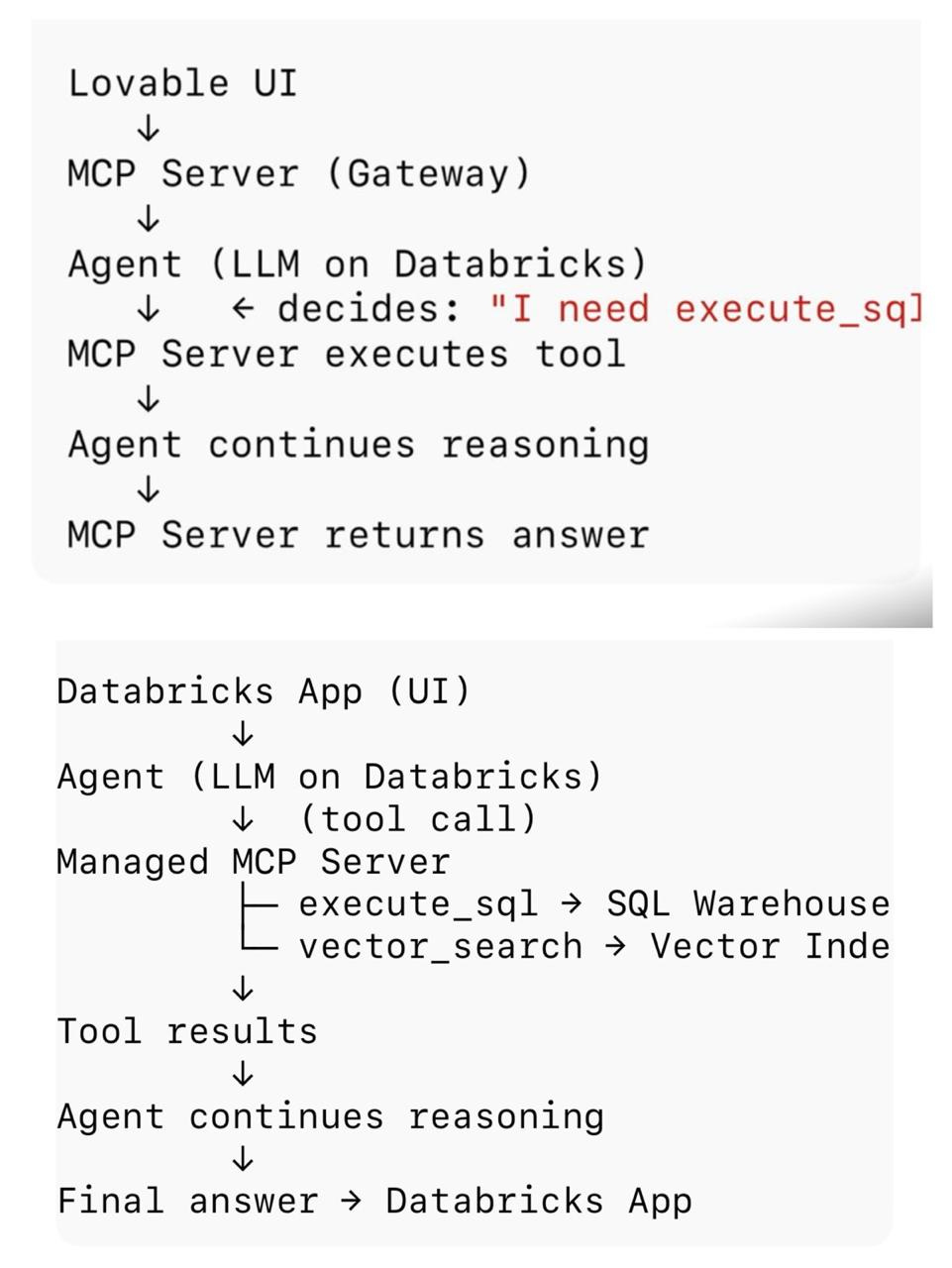
The image above captures the two most common enterprise realities:
An internet-facing application (Lovable / Web)
A Databricks-native application (internal, governed)
Same concept.
Very different responsibilities.
Let’s walk through both — step by step — using only the flows shown in the diagram.
Case 1: Internet-Facing MCP Flow (Lovable / Web)
This is the top flow in the image.
Here, your UI is public-facing — running on the open internet.
That single fact changes everything.
What this environment looks like
You are dealing with:
Untrusted clients
OAuth / SSO boundaries
Network exposure
Audit and compliance requirements
The need to strictly control what can touch data
In this world, MCP is not optional — it becomes a hard architectural boundary.
The actual flow
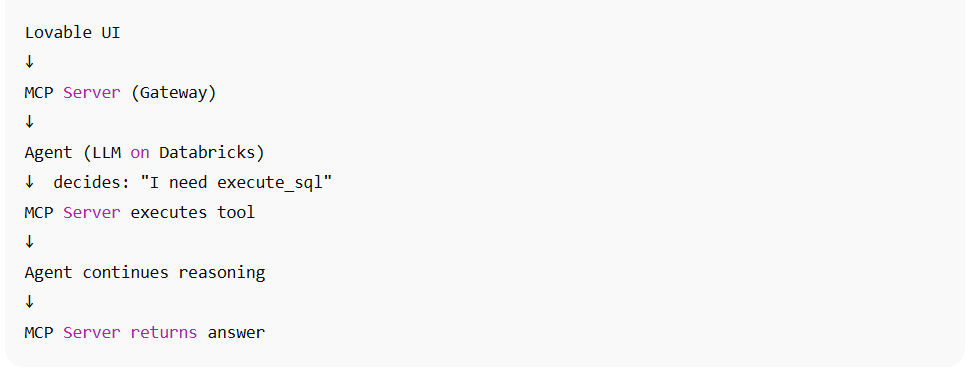
What’s really happening here
The UI never talks to the Agent directly
The UI never touches tools
The Agent never touches data systems
The MCP Server acts as a gateway:
It authenticates requests
Enforces permissions
Executes tools
Audits everything
Returns only safe results
This is why internet-facing systems often end up with domain-specific tools like:
execute_query_salesexecute_query_financesearch_pdf_sales_docs
Not because it’s elegant — but because explicit separation is safer than implicit trust.
In this setup, MCP is a security and execution layer, not just a protocol.
Case 2: Databricks-Native Managed MCP Flow
Now look at the bottom flow in the image.
Here, everything lives inside Databricks.
That changes the role MCP needs to play.
What this environment looks like
The UI is a Databricks App
The Agent runs inside Databricks
Identity, permissions, and access are already governed
Unity Catalog enforces data access
There is no untrusted client crossing the perimeter.
The actual flow
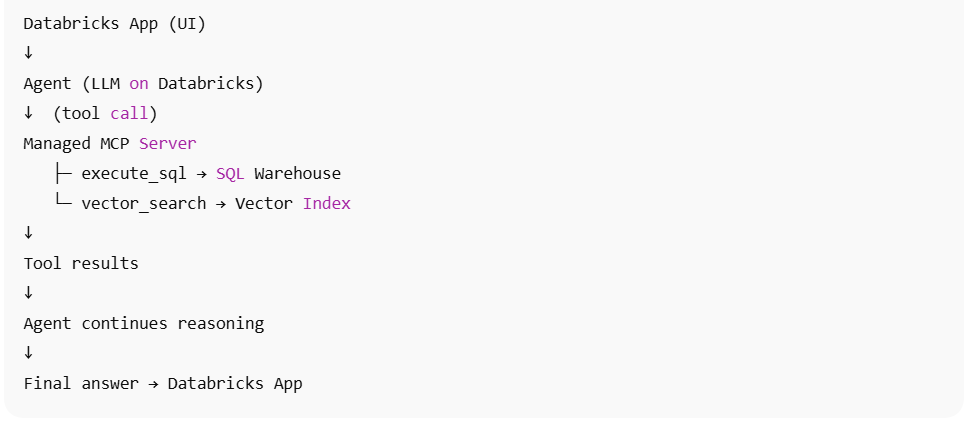
What’s different here
The UI can safely call the Agent
The Agent can safely request tool execution
The Managed MCP Server executes tools inside the same trust boundary
Unity Catalog enforces access at query time
You don’t need:
Domain-split tools
Multiple gateways
Custom permission logic per tool
Instead, you get generic tools like:
execute_sqlvector_search
And governance happens below the tool, not inside it.
Here, MCP is not a security gateway — it is a clean execution contract.
The Rule That Explains Both Flows
Everything in this post collapses into one rule:
The Agent is the brain.
MCP is the hands.
The UI talks only to the brain — never to the hands.
And one more:
The Agent never touches data systems directly.
Only MCP tools touch data systems.
The difference between the two flows is not MCP itself —
it’s how much responsibility MCP must carry.
Why This Distinction Matters
If you ignore this distinction:
You over-engineer internal systems
You under-secure internet-facing ones
You blur reasoning and execution
You create audit and blast-radius problems later
If you design MCP correctly:
Your architecture scales from chat → agent → multi-tool systems
Security becomes composable
Governance becomes declarative
The system remains explainable to humans
Final Thought
MCP is not “another AI framework.”
It’s an architectural contract that answers one question clearly:
Who is allowed to touch reality?
Once that is clear, everything else falls into place.
Originally published on Substack