✍️ AI-Ready Engineer Day 3 — What Is RAG (Retrieval-Augmented Generation)?
Part of the “AI Engineering for Data Engineers & Analysts” series.
You’ve heard it everywhere: RAG is the future of LLM applications.
But what does it actually mean — and why does every AI startup and enterprise use it?
Let’s break it down in plain English 👇
🔁 RAG = Retrieval-Augmented Generation
It’s a technique where we combine your data (retrieved at runtime) with the language model’s generation power.
Instead of expecting the LLM to remember everything, you help it retrieve what it needs — just in time.
🧠 Why It Matters
Out-of-the-box LLMs (like GPT, Claude, or Mistral):
Don’t have access to your private data
Can’t accurately answer questions about internal systems, policies, or reports
May “hallucinate” if they don’t have the right context
RAG solves that.
⚙️ How RAG Works
At a high level:
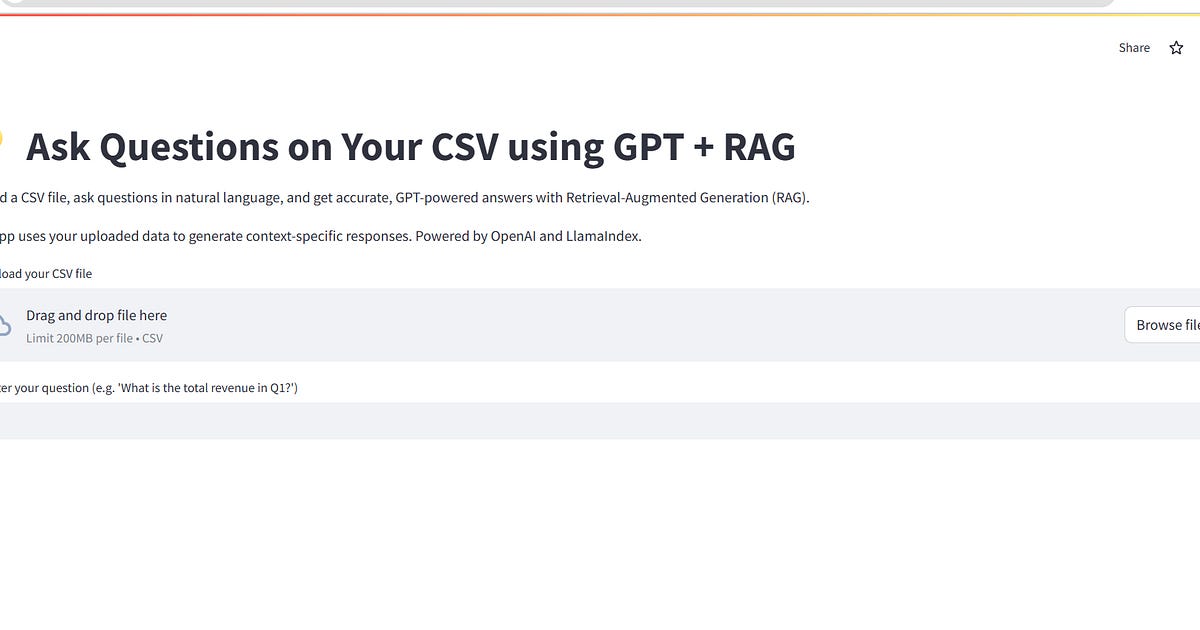
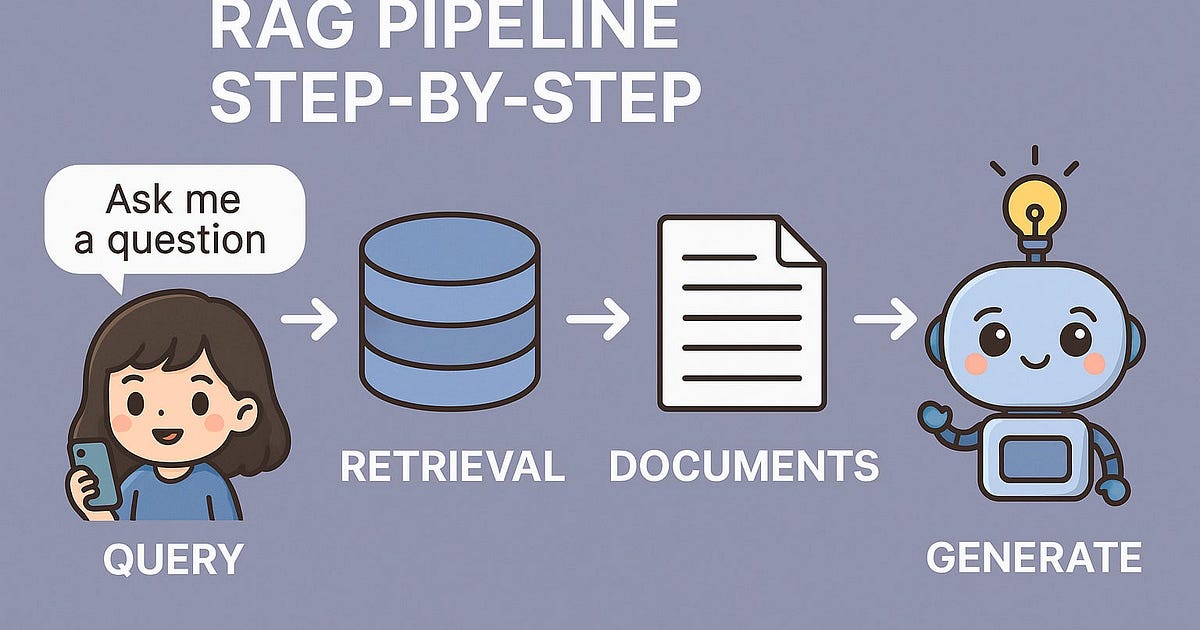
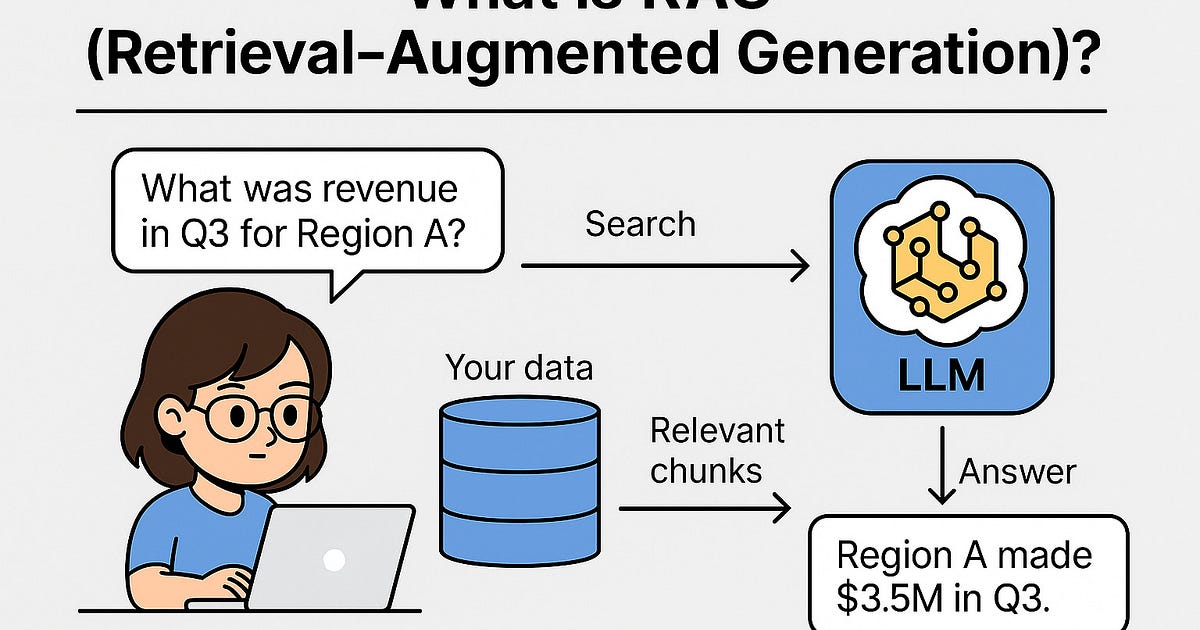
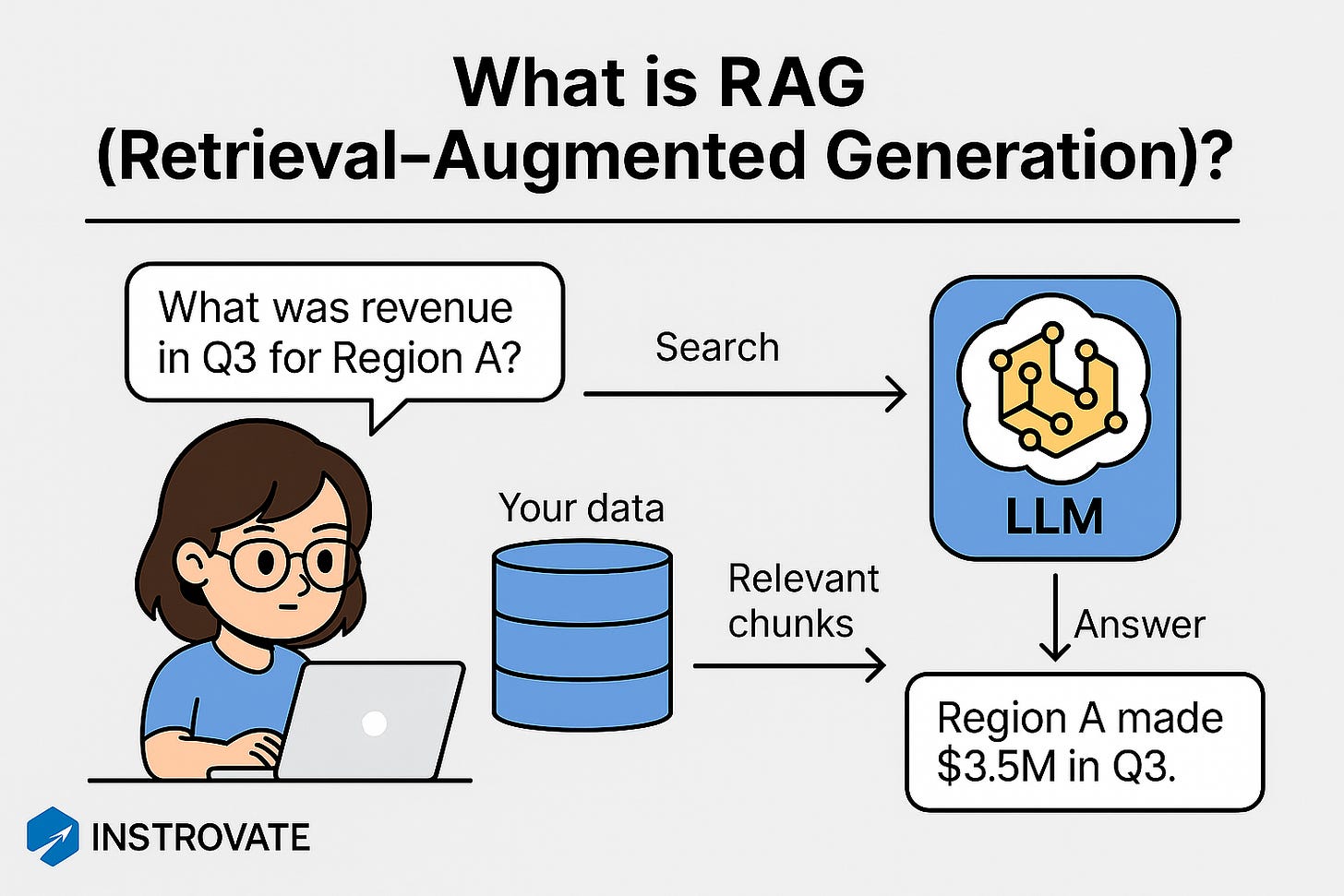
User asks a question (e.g., “What was revenue in Q3 for Region A?”)
System searches your data (structured or unstructured)
Relevant chunks are retrieved
These chunks are passed into the LLM along with the prompt
LLM generates a response grounded in that retrieved info
No fine-tuning needed.
Just smart retrieval → smart generation.
🧱 In Real Life
RAG is used in:
Enterprise search tools
Chatbots trained on company documents
Assistants for customer service, HR, legal, finance
Power BI copilots that query structured data
Custom apps built with Power Apps + Azure OpenAI
💡 Takeaway:
Don’t try to make the model remember everything.
Instead, let it look it up — and talk about it.
That’s RAG. And it’s your best friend as an AI Engineer.
🛠️ Tomorrow, we’ll build your first RAG pipeline — step-by-step.
Want the guide delivered to your inbox?
📬 Subscribe now →
Originally published on Substack