Why Goddess Lakshmi Never Stays Where Money is Hoarded: Ancient Hindu Wealth Wisdom That Modern Millionaires Finally Understand
What our ancestors knew about wealth creation that Wall Street is just discovering
Three months ago, while researching millionaire habits, I stumbled upon something that completely shifted my understanding of wealth creation.
It wasn’t in a Harvard Business Review article or a Silicon Valley podcast. It was in a 5,000-year-old Sanskrit text describing why Goddess Lakshmi is called “Chanchal” – the restless one.
The revelation was mind-blowing: Ancient Hindu wisdom had already figured out the secret to sustainable wealth that modern finance is only now catching up to.
The Lakshmi Principle: Why Wealth Must Flow
In Hindu mythology, Goddess Lakshmi represents not just wealth, but the principle of abundance itself. But here’s what most people miss: she’s specifically called “Chanchal” – meaning restless, ever-moving, never static.
The ancient texts are crystal clear: Lakshmi abandons those who hoard wealth.
This isn’t just spiritual philosophy. It’s practical economics disguised as mythology.
Think about it: every billionaire today follows the Lakshmi Principle without even knowing it. They don’t stuff money under mattresses – they circulate it, invest it, use it to create more value.
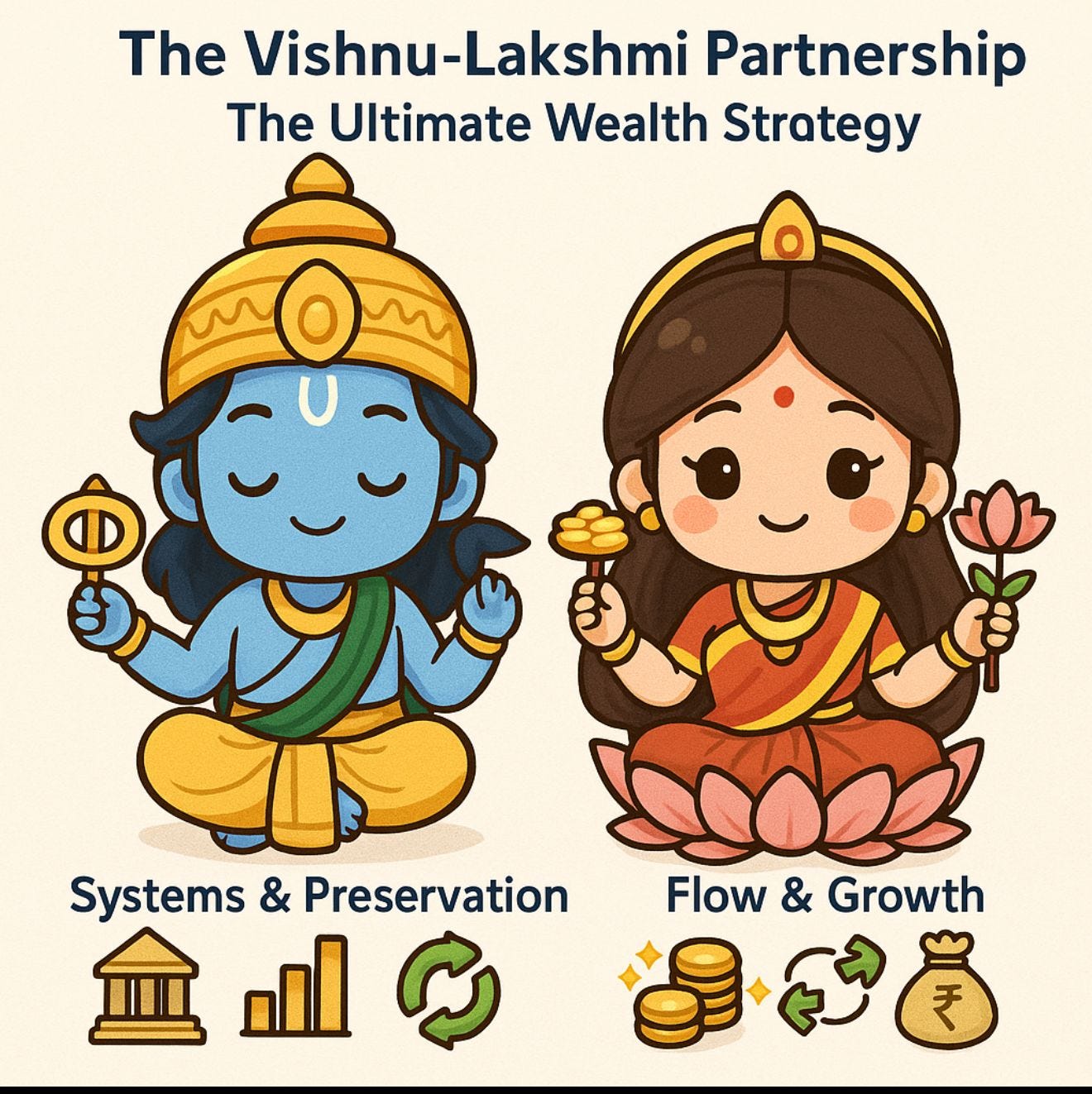
The Vishnu-Lakshmi Partnership: The Ultimate Wealth Strategy
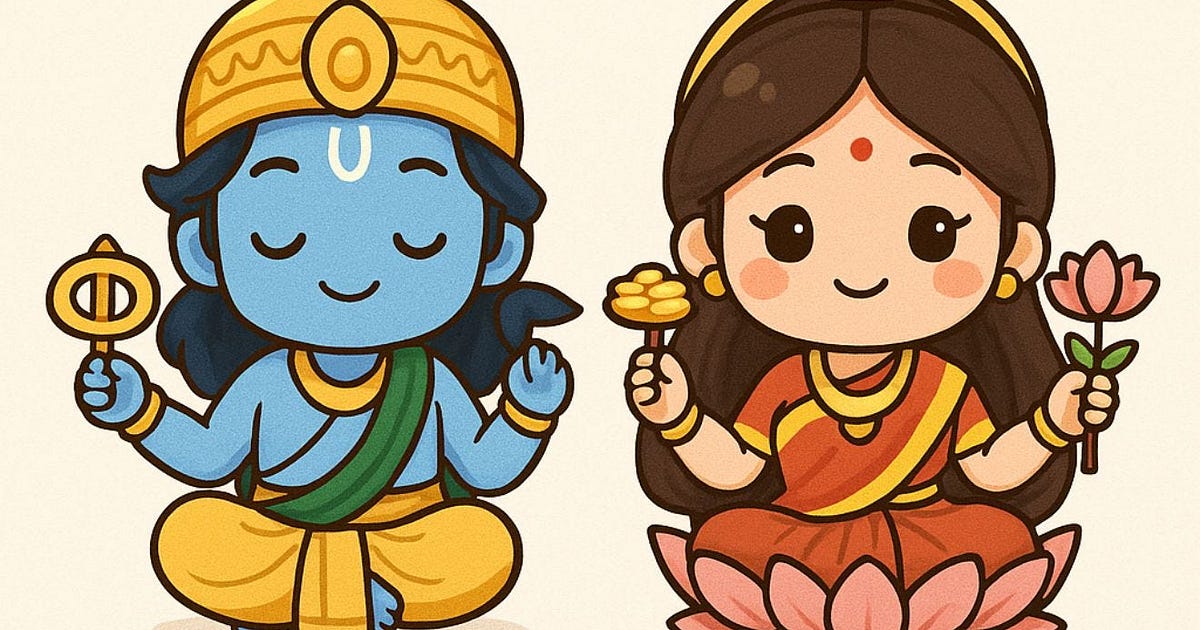
Here’s where it gets fascinating. Lord Vishnu (the preserver) and Goddess Lakshmi aren’t just married in mythology – they represent the perfect wealth-building partnership:
Vishnu = Systems & Preservation
• Creating sustainable structures
• Building things that last
• Maintaining and protecting value
Lakshmi = Flow & Growth
• Constant movement of resources
• Multiplication through circulation
• Abundance through generous exchange
Every successful entrepreneur unconsciously follows this model. They build systems (Vishnu) while keeping money flowing (Lakshmi).
Shubh-Labh: The Ancient Formula for Prosperity
Walk into any Indian business during Diwali, and you’ll see “Shubh-Labh” written everywhere. Most people think it just means “good luck and profit.”
They’re missing the deeper wisdom.
Shubh = Auspicious Action
• Right timing
• Ethical means
• Value creation for others
Labh = Beneficial Gain
• Profit that serves everyone
• Wealth that multiplies
• Success that lifts others
This isn’t just about making money. It’s about creating wealth in a way that the universe conspires to help you.
The Three Lakshmi Laws Modern Millionaires Follow
After studying both ancient texts and modern millionaires, I discovered three core principles that both follow:
Law 1: The Circulation Principle
Ancient Wisdom: “Lakshmi flows like water – she never stays in stagnant pools.”
Modern Application: The wealthiest people constantly reinvest, donate, and circulate their money. They understand that hoarding kills growth.
Example: Warren Buffett has given away over $50 billion and is still getting richer. Jeff Bezos constantly reinvests profits into new ventures.
Law 2: The Value Creation Principle
Ancient Wisdom: “Lakshmi comes to those who create prosperity for others.”
Modern Application: Every lasting fortune is built on solving problems for others. Money follows value creation.
Example: The richest people today didn’t get wealthy by taking from others – they got wealthy by creating value that didn’t exist before.
Law 3: The Timing Principle
Ancient Wisdom: “There is a time to save, a time to spend, and a time to multiply.”
Modern Application: Knowing when to hold, when to fold, and when to go all-in. Economic cycles, market timing, and strategic patience.
Example: The best investors buy when others are selling and sell when others are buying.
The Diwali Wealth Ritual That Actually Works
During Diwali, families perform Lakshmi Puja with specific rituals. But most people don’t understand the psychological programming behind these actions:
Cleaning the house = Clearing mental clutter to think clearly about money
Lighting diyas = Illuminating opportunities you couldn’t see beforeOpening doors and windows = Creating pathways for new income streams
Sharing sweets = Building networks through generous giving
These aren’t superstitions. They’re ancient psychological techniques for developing a wealth mindset.
The Modern Millionaire Who Follows Ancient Wisdom
I recently interviewed a tech entrepreneur who’s built three successful companies. When I asked about his wealth philosophy, he said something that gave me chills:
“I never hold onto money too tightly. The moment I feel like I’m hoarding, I invest in something new or give some away. Money is like energy – it has to keep moving to stay alive.”
He’d never heard of the Lakshmi Principle. But he was living it perfectly.
What This Means for Your Wealth Journey
Here’s the practical application of this ancient wisdom:
Stop Hoarding, Start Circulating
• Keep only 3-6 months of expenses in savings
• Invest the rest in assets that grow
• Give away 10% to causes you believe in
Build Systems, Not Just Savings
• Create multiple income streams (Vishnu’s preservation)
• Ensure money keeps flowing through them (Lakshmi’s movement)
• Focus on building things that generate value even when you sleep
Follow the Shubh-Labh Method
• Only pursue opportunities that create value for others (Shubh)
• Ensure your gain lifts others too (Labh)
• Trust that ethical wealth creation compounds faster than exploitation
The Question That Changed Everything
After diving deep into this ancient wisdom, I started asking myself: “Am I building wealth like Lakshmi – through generous circulation and value creation? Or am I trying to hoard like a fearful miser?”
The answer was uncomfortable but transformative.
I realized I’d been treating money like a scarce resource to be protected, rather than abundant energy to be channeled.
The moment I shifted from hoarding to circulating, from protecting to creating, everything changed.
Your Lakshmi Moment
I’m curious: When you think about your relationship with money, are you following the Lakshmi Principle of generous circulation, or are you stuck in scarcity thinking?
And more importantly – what’s ONE way you could let money flow more freely in your life this week, trusting that circulation creates abundance?
The ancient sages knew something we’re just rediscovering: Wealth isn’t about having money. It’s about becoming a channel through which abundance flows.
If this ancient wisdom resonates with you, subscribe for more insights where timeless principles meet modern success strategies. Next week: The Ganesha Method for removing obstacles to wealth creation.
P.S. - I’m curious to hear your thoughts on this connection between ancient wisdom and modern wealth creation. Have you noticed the Lakshmi Principle playing out in your own financial life? Hit reply and share your story.
What’s your biggest takeaway from this ancient wealth wisdom? Let me know in the comments below.
Originally published on Substack