The RAG Wars: How AI Search Is Splitting into Two Philosophies
A tale of two approaches to making AI actually useful . We’re witnessing a fork in the road for Retrieval-Augmented Generation (RAG). And it’s being led by…
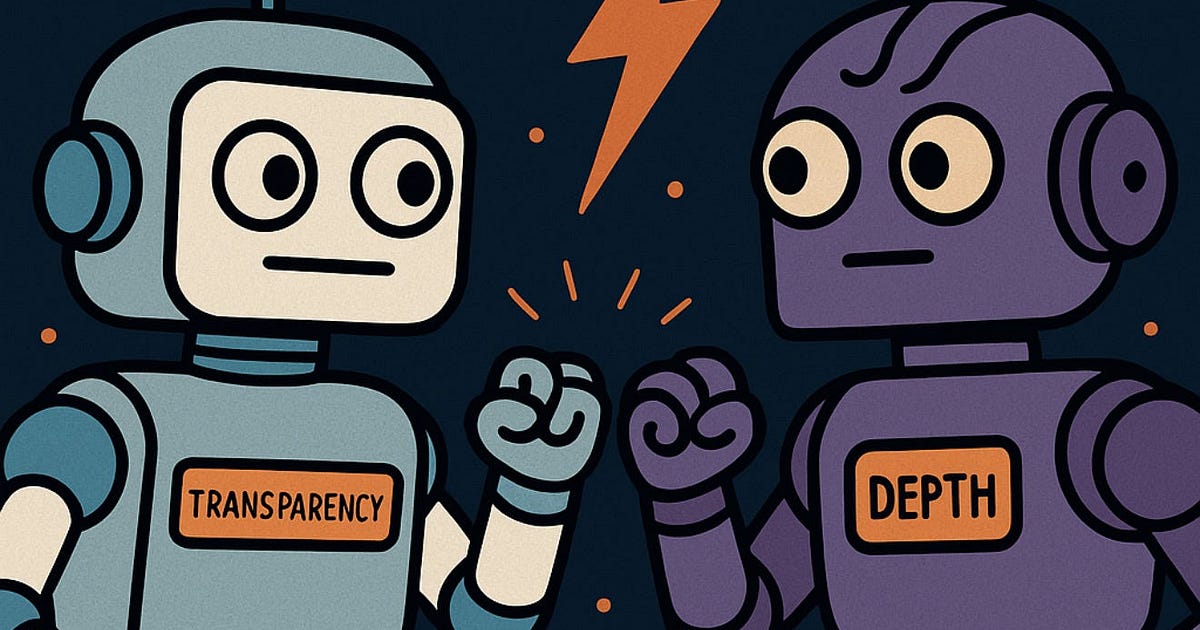
A tale of two approaches to making AI actually useful . We’re witnessing a fork in the road for Retrieval-Augmented Generation (RAG). And it’s being led by some of the biggest players in AI — each betting on fundamentally different philosophies.
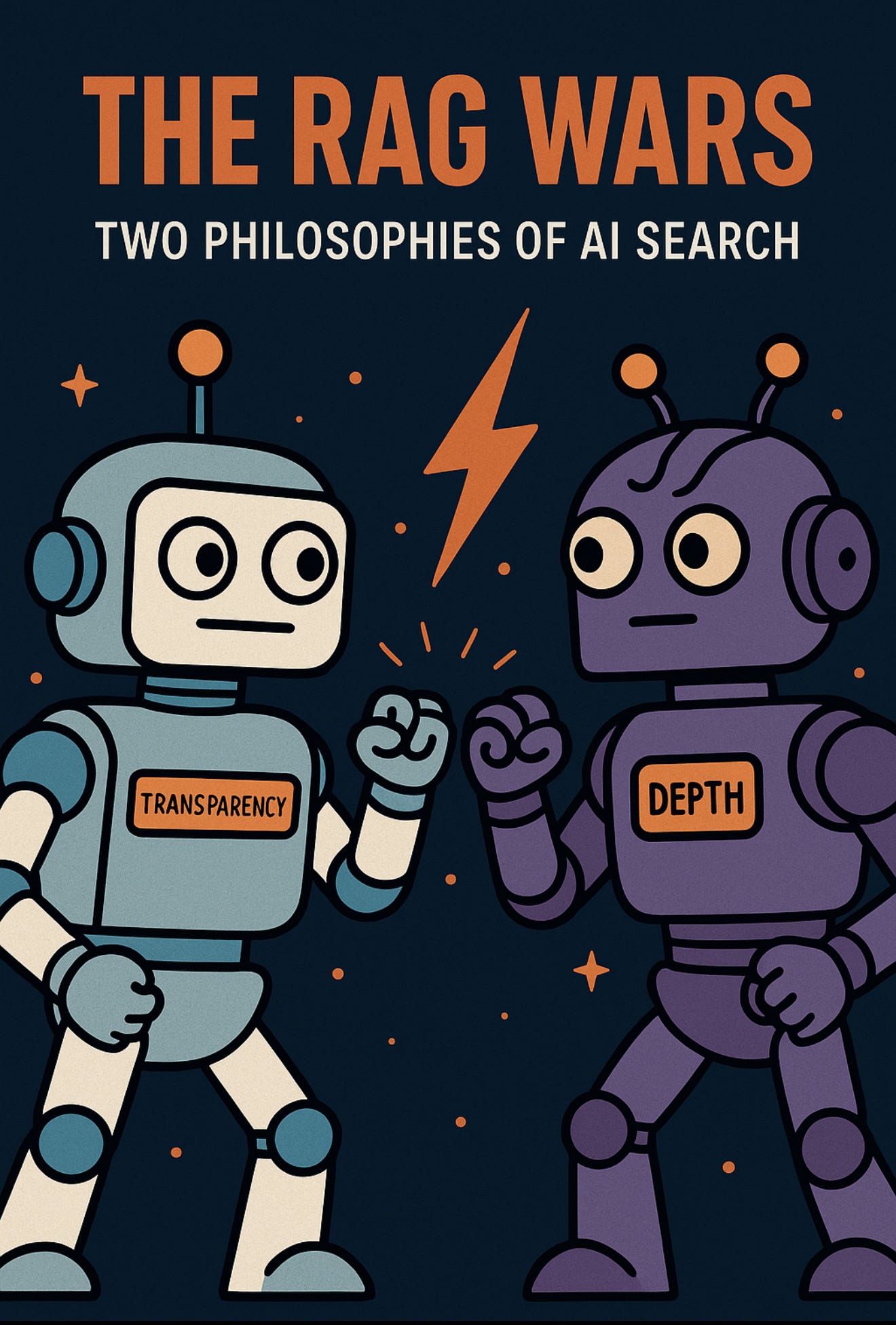
⚔️ Team Transparency vs. Team Depth
🟦 Team Transparency:
Perplexity AI
Perplexity has become the go-to tool for anyone who wants clear answers with sources. Every response comes with citations, every claim is traceable, and it all happens in real-time.
It’s the AI equivalent of a research assistant who never skips footnotes.
How it works:
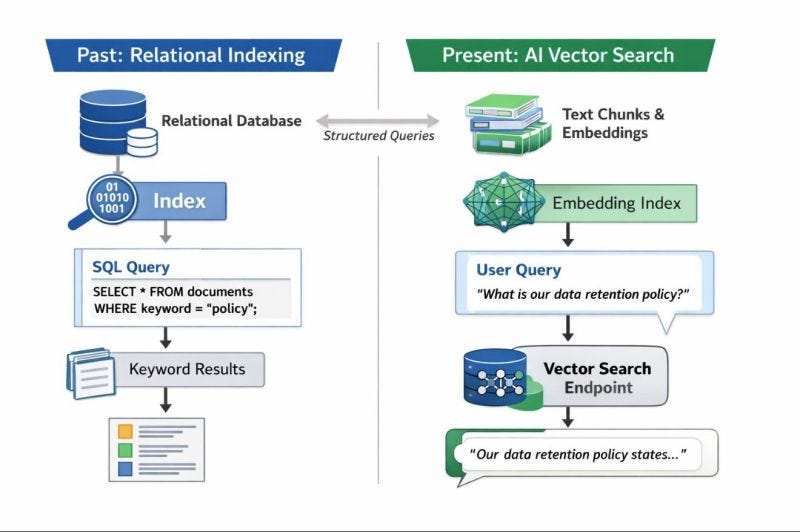
Perplexity retrieves live data from the web
It feeds that into an LLM like GPT-4 or Claude
The LLM then generates the response using this context, which is returned with clickable citations
It’s not trying to be the most creative or abstract thinker — it’s trying to be the most verifiable.
Think of it as the Wikipedia of AI search: not always the deepest, but reliably sourced, fast, and always citing its work.
🟪 Team Depth:
Claude Sonnet (Anthropic)
Claude is designed for something deeper — complex reasoning over vast context windows, and multi-step synthesis.
Rather than linking every sentence to a source, Claude’s Contextual Retrieval model:
Understands relationships between concepts
Performs multi-step thinking
Handles up to 200,000 tokens — enough to process full books or complex workflows
Anthropic is also pushing the envelope with Agentic RAG: systems where the AI doesn’t just retrieve once — it iteratively searches, reflects, and refines its answers.
Claude behaves less like a search engine and more like a domain expert drafting a thoughtful, high-context response.
🤖 Wait… Isn’t Perplexity Just a Wrapper on ChatGPT?
This is a common misunderstanding — so let’s clarify:
❌ Perplexity is not an LLM like GPT-4 or Claude.
✅ It is a RAG-based interface that uses
LLMs — including ChatGPT — to generate answers.
Here’s what makes it unique:
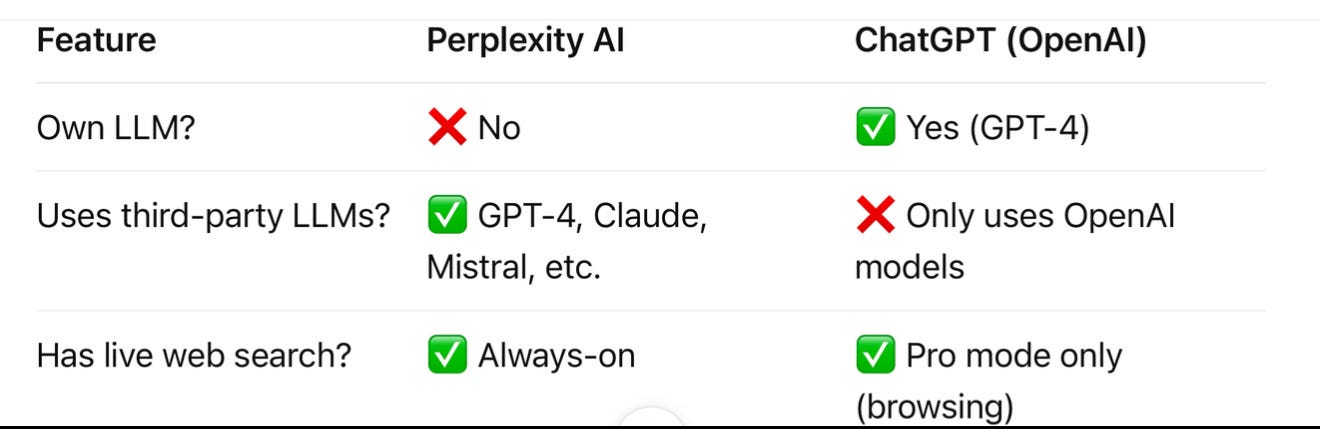
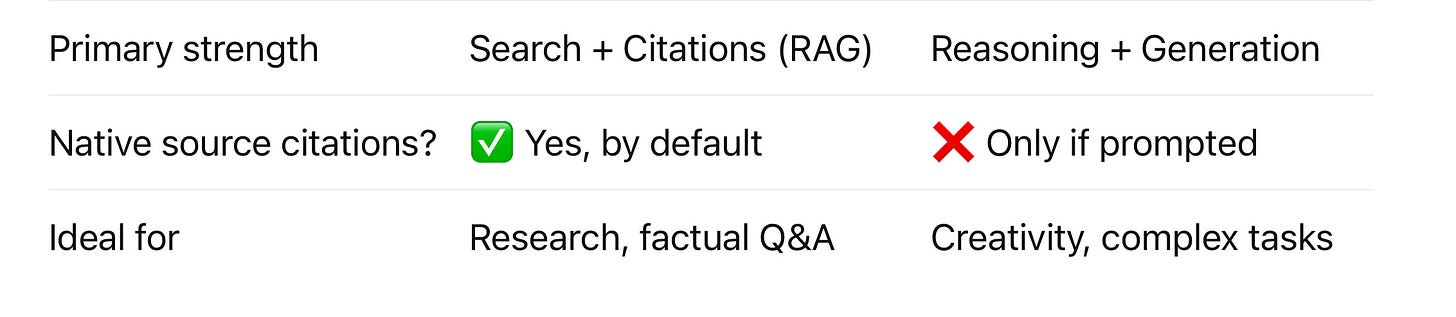
So yes — Perplexity often uses ChatGPT behind the scenes.
But no — it’s not “just a wrapper.” It’s a full-blown AI search engine, orchestrating retrieval + prompt construction + source selection.
🔄 Recent Plot Twists
💰 Perplexity’s Power Move
In June 2025, Perplexity raised $500M, pushing its valuation to $9B, and acquired Carbon, a startup focused on enterprise RAG.
They’re now building features to:
Let users search across personal + organizational data
Extend their transparency-first model to enterprise environments
Compete directly with Google Search, but with citations and AI answers instead of SEO spam
🧠 Claude’s Agentic Leap
Anthropic is quietly pioneering Agentic RAG — where the AI behaves like a proactive analyst.
Rather than returning a single answer, Claude can:
Investigate sub-questions
Follow-up with additional context gathering
Return structured, multi-step synthesis
This makes it ideal for strategic research, decision support, and cross-domain problem-solving — especially when understanding beats surface-level accuracy.
🧠 Where Does ChatGPT Fit?
⚪️ OpenAI: The “Blended Approach”
OpenAI’s ChatGPT doesn’t align exclusively with either camp.
It’s:
Capable of deep reasoning (like Claude)
Able to retrieve web results in GPT-4 Pro mode (like Perplexity)
Now supports Memory, Custom GPTs, and multi-modal inputs, edging closer to Agentic AI
But ChatGPT’s answers don’t always cite sources, unless you use the Browsing tool, ask explicitly, or enable plugins.
OpenAI seems to be betting on a modular future, where users can toggle between:
Retrieval-based reasoning
Agent-style workflows
Tool usage and plugins — all within a single, flexible interface.
⚖️ Trust vs. Intelligence: The Bigger Picture
This isn’t just about which AI wins the RAG race.
It’s about how we want to interact with knowledge in the AI era.
Do we want AIs that:
🟦 Cite everything and let us decide?
🟪 Synthesize deeply and give us expert-like answers?
Or will the future belong to a hybrid system that blends both?
In truth, we’re watching a natural experiment in real-time — and the outcome will shape how we search, learn, and think for the next decade.
🧠 Final Thought: This Isn’t Just Tech — It’s Philosophy
Perplexity optimizes for trust.
Claude optimizes for insight.
ChatGPT is evolving to balance both
As AI becomes our second brain, it’s not about which tool is smarter.
It’s about which one you trust to think alongside you.
💬 Are You Team Transparency or Team Depth?
I’d love to hear from you.
Which approach aligns more with how you work?
Have you used Claude, Perplexity, or ChatGPT for deep research?
What do you trust more — citations or smart synthesis?
Let me know in the comments.
Originally published on Substack